
I have questions.
Actually, I have 546 of them.
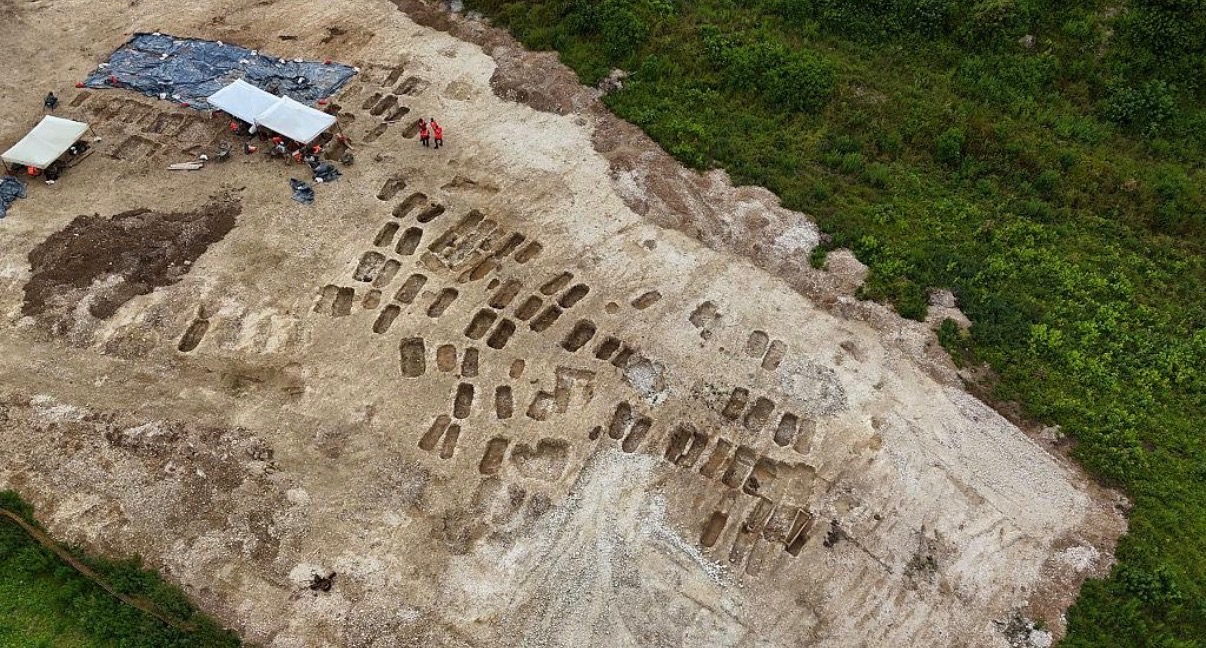
Because imagine showing up to work on a canal, digging into the French countryside and realizing the dirt underneath you isn’t just dirt.
It’s a cemetery.
And not a little forgotten family burial plot, either. Archaeologists have uncovered 546 medieval graves so far—and apparently the words “so far” are doing some pretty heavy lifting here because they haven’t even excavated the entire site.
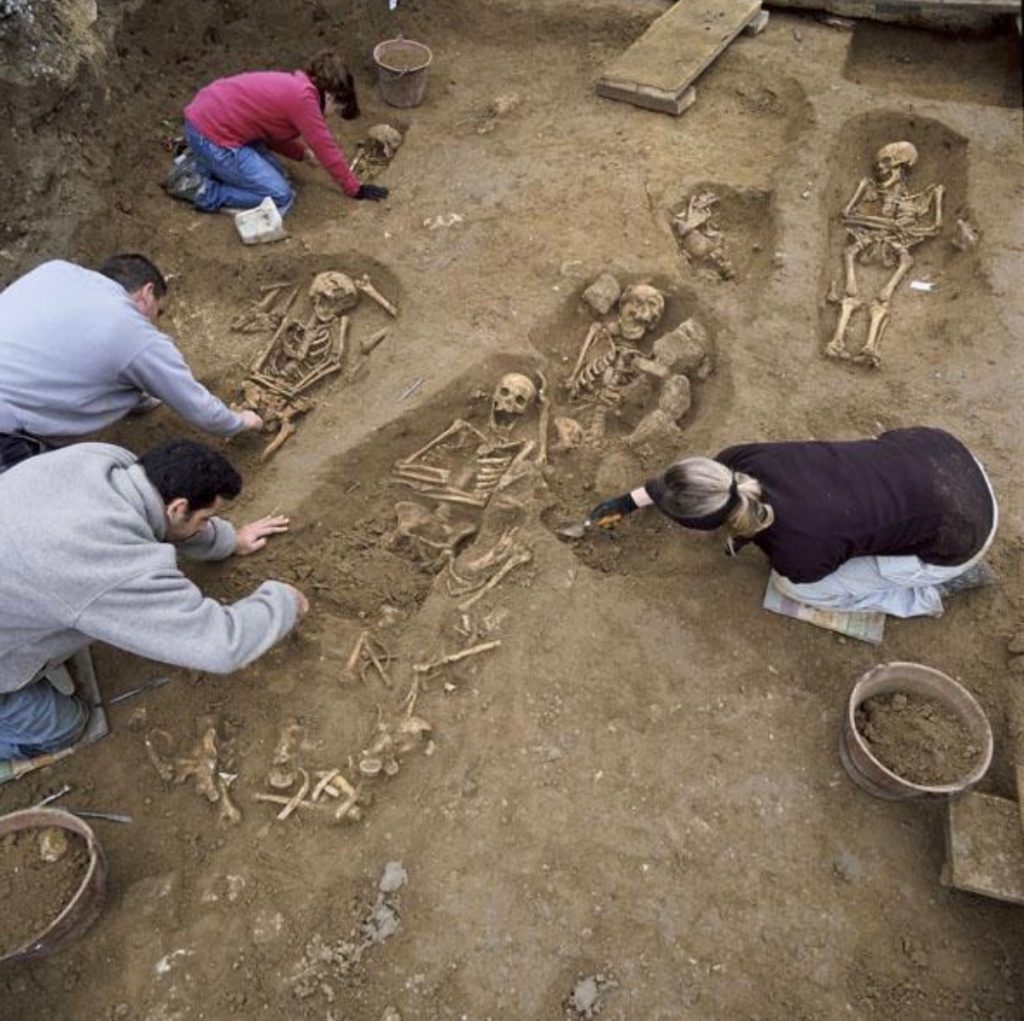
Some of these people were buried five layers deep.
Five.
So naturally, instead of reading that headline like a normal person and continuing with my day, I needed to know who all these people were, why they were buried there, and how an entire cemetery containing hundreds of human beings essentially disappeared from memory.
And that’s where this rabbit hole gets interesting.
Okay, But Why Are There 546 People Buried Here?
The first thing I wanted to know was whether somebody already knew this cemetery existed. Because 546 graves don’t exactly scream “tiny forgotten burial ground.”
And technically, archaeologists knew there was something here. The site is in Beaurains-lès-Noyon in northern France, along the route of the enormous Seine-Nord Europe Canal project. Before construction could move forward, archaeologists were brought in to investigate what was beneath the ground.
What they uncovered kept getting bigger.
By June 2026, more than 300 graves had been identified. By September, that number had climbed to 546—and the excavation still wasn’t finished.
But the number isn’t even the strangest part.
In some areas, the dead were buried up to five layers deep, one generation of graves above another.
Which immediately made me wonder:
What happened here that required this many graves?
Then the Leprosy Theory Entered the Picture
At first glance, hundreds of people buried together might make you think plague, war, famine—some catastrophic event that killed a huge number of people at once.
But that’s not what archaeologists are looking at here.
The burials appear to span centuries, and among the oldest remains, researchers noticed something unusual: some individuals showed signs of serious medical conditions that may have severely affected their mobility.
That led archaeologists to consider a much stranger possibility.
Could there have been a medieval leprosy hospital nearby?
Now that sent me in another direction entirely.
Because if this was connected to a place where people with leprosy were isolated and cared for, suddenly hundreds of burials in one location begin to make a little more sense.
Except there’s a problem.
They don’t actually know that’s what this was.
And the other possibility may be even more fascinating.
What If This Was Just….Their Cemetery?
Here’s the theory I didn’t expect.
It’s possible there was no mysterious hospital, no single disaster and no extraordinary explanation at all.
This may simply have been the cemetery for a medieval community whose story has largely disappeared.
And somehow, I think that makes it even stranger.
We’re talking about hundreds of people—men, women and children—who lived entire lives here. They had families. They got sick. They worked. They buried one another in the same ground, generation after generation, until some graves were stacked five levels deep.
Then enough time passed that the community changed, the cemetery disappeared from view, and eventually people were preparing to dig a canal straight through it.
Imagine an entire piece of your community existing for centuries and eventually becoming something people have to rediscover with an excavator.
And archaeologists still aren’t sure exactly who these people were.
The Bodies Are Starting to Talk
Of course, archaeologists aren’t literally asking 546 skeletons what happened here—but honestly, they may be the closest thing we have to witnesses.
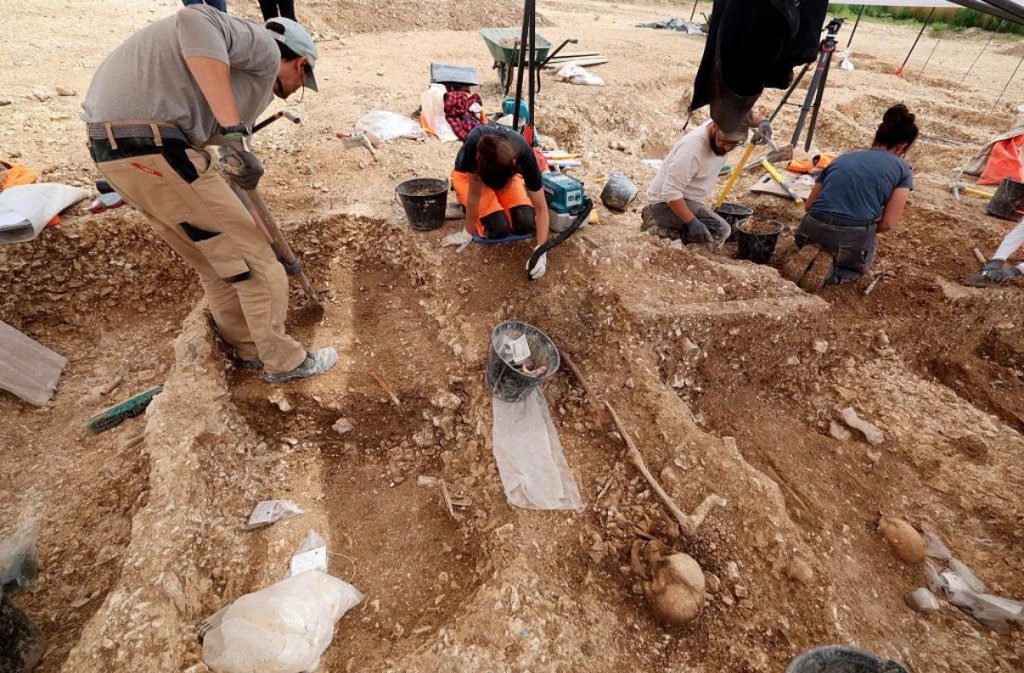
The remains can reveal clues about age, biological sex, disease, injuries and physical stress, while radiocarbon dating can help determine when different people were buried. Researchers can then compare those findings with historical records to figure out how long this cemetery was used and what kind of community may have surrounded it.
And this is the part I love about archaeology.
These people didn’t leave behind an explanation for us. There’s no sign sitting in the field saying, “Here’s who we were and why we buried our dead here.”
So researchers have to reconstruct the story from what survived.
Bone by bone. Grave by grave.
And Somehow, 546 Isn’t Even the Final Number
Here’s the part that keeps bothering me: 546 is not necessarily where this ends.
That was the number uncovered while excavation was still underway. So somewhere beneath that stretch of French countryside, there may still be more graves waiting to be found.
And I keep coming back to the same thought.
At some point, every person archaeologists are uncovering here was known by somebody.
Someone knew their name. Someone recognized their face. Someone stood at at least some of these graves and went home without them.
Now, centuries later, we don’t even know exactly why they’re all there.
That’s the part of archaeology that gets me. We tend to think of history as something permanent because we write things down, take pictures and document our lives.
But 546 people can disappear from collective memory badly enough that one day somebody starts building a canal over them.
That is absolutely wild to me.
So…. What Are They Doing There?
For now, we don’t know.
Maybe further analysis will confirm that this cemetery was connected to a place that cared for people with leprosy or other illnesses. Maybe researchers will discover it belonged to an ordinary medieval community whose cemetery simply grew for generations.
Or maybe the answer is something nobody has considered yet.
That’s what hooked me about this story in the first place. Finding 546 graves sounds like the discovery.
It isn’t.
The discovery opened the door to a much bigger question: Who were these people?
Researchers now have hundreds of lives sitting in front of them like pieces of a puzzle, and somewhere among the bones, historical records and dates is an answer.
Until they find it, I’ll be over here wondering how many other completely forgotten pieces of history are sitting underneath places we walk and drive across every single day.
Because apparently all it takes is somebody deciding to dig a canal.
And now I need to know what they find next.
SOURCES
French Ministry of Culture — National Archaeology Days
Beaurains-lès-Noyon archaeological site: medieval cemetery excavation