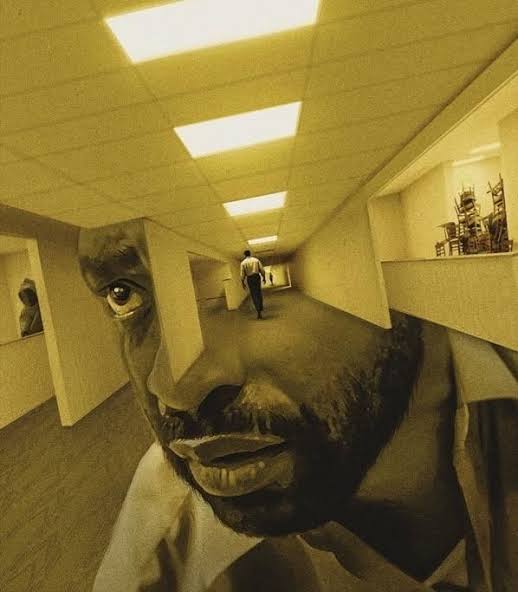
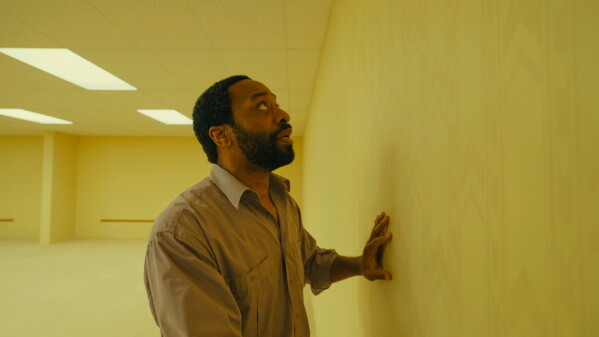
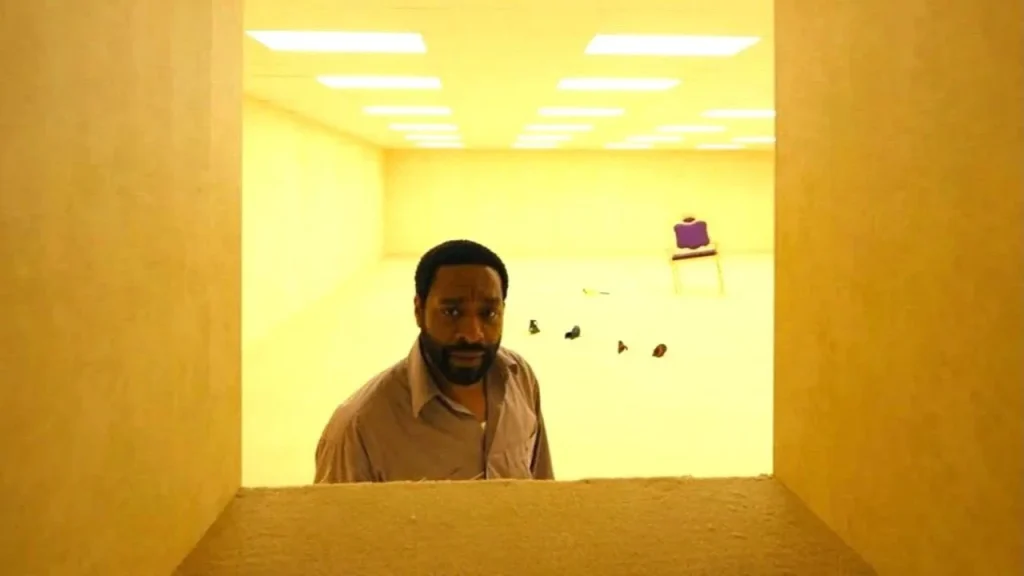
I genuinely don’t know how else to describe Backrooms except to say it may be the most fucked-up movie I’ve ever watched.
Not because it’s particularly bloody or packed with jump scares. It’s because I spent half the movie thinking WHAT THE FUCK IS HAPPENING, and when the credits rolled, I still wasn’t entirely sure.
So naturally, I went down the rabbit hole.
And once you understand what the Backrooms are actually doing, the movie makes a hell of a lot more sense.
My Spoiler-Free Review
This isn’t your typical horror movie. It’s weird, unsettling, liminal horror where everything looks almost normal—but something is always wrong.
I couldn’t look away.
My rating: ⭐️⭐️⭐️⭐️⭐️ 5/5
My WTF rating: 47/5
If you haven’t watched it yet, STOP HERE.
⸻
🚨 EVERYTHING BELOW CONTAINS SPOILERS 🚨
So What the Hell Are the Backrooms?
The biggest thing to understand is that the Backrooms aren’t simply endless yellow rooms.
They’re copying reality.
Places. Furniture. Memories. Eventually, even people.
But whatever is doing the copying doesn’t completely understand what it’s recreating. That’s why everything feels familiar while also feeling wrong.
The human copies are called Still Lifes. They can imitate a person, but they’re not actually human.
Once you understand that, most of the insanity starts falling into place.
Clark Is Feeding the Backrooms
Clark enters the Backrooms already falling apart. His marriage is gone, his business is failing, he’s drinking, and he’s desperately holding onto the life he used to have.
Then the Backrooms start recreating pieces of that life.
The deeper Clark goes, the more personal everything becomes.
Essentially, the Backrooms are learning him through his memories.
But memories aren’t perfect.
So what comes back isn’t perfect either.
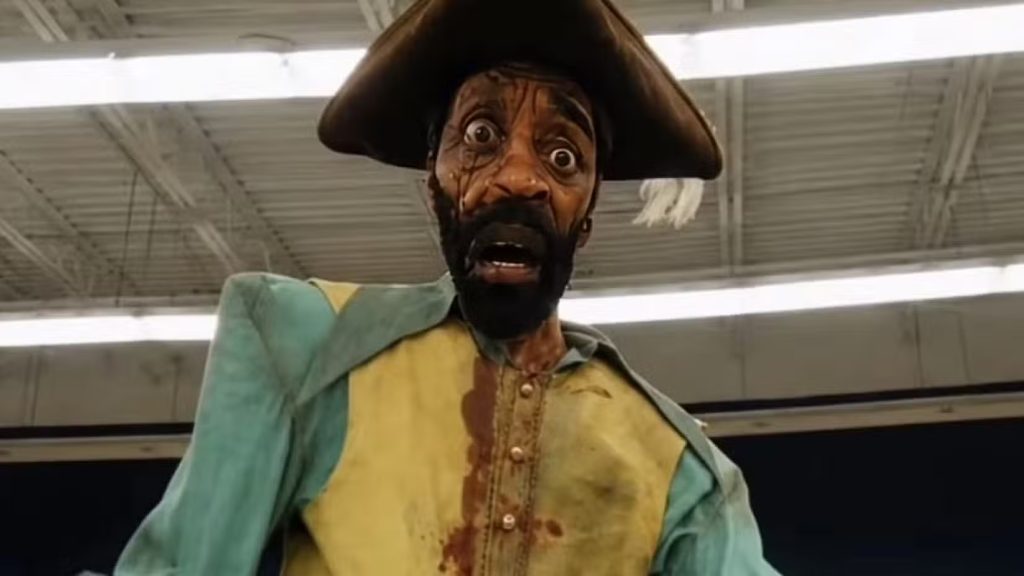
Okay… WHAT THE FUCK WAS PIRATE CLARK?
😂 Because seriously.
Pirate Clark isn’t just some random nightmare creature.
He’s a Still Life version of Clark—the Backrooms’ warped attempt at recreating him.
And eventually, the copy destroys the original.
That’s what makes Clark’s story so disturbing. He spends the movie clinging to an artificial version of his old life until, quite literally, the artificial version of him replaces the real one.
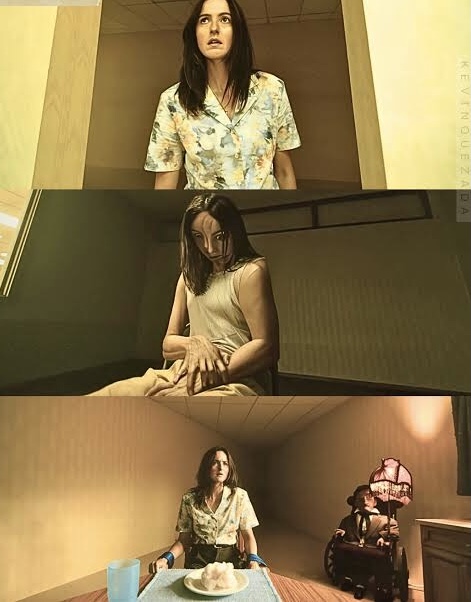
And What About Mary?
Mary does appear to escape.
But the Backrooms have been learning her too.
That’s why the final reveal of another Mary is so important.
I don’t think it means the Mary who escaped was fake.
I think it means something much worse:
The Backrooms learned Mary well enough to make their own.
The real Mary got out.
But a version of her stayed behind.
⸻
So What Does It All Mean?
I don’t think Backrooms is supposed to give us every answer.
But underneath all the absolute insanity, it’s really a movie about memory, identity, trauma and our obsession with the past.
The Backrooms take pieces of you—your memories, relationships, places and identity—and recreate them.
Almost perfectly.
Almost.
And somehow that’s considerably more terrifying than just putting a monster in a hallway.
Would I recommend it?
Absolutely.
Did I understand what the fuck I was watching while I was watching it?
Absolutely not. 😂
⭐️⭐️⭐️⭐️⭐️ 5/5
I loved it. I hated it. I’m disturbed. And now I need everyone else to watch it so we can collectively figure out what the hell we just saw.
I read a lot of thrillers. A LOT. Murder, serial killers, haunted houses, creepy woods, things lurking in the dark—you name it. At this point, it takes quite a bit for a book to genuinely scare me.
And by scare me, I don’t mean, “Oh, that was creepy.”
I mean put-the-book-down-and-look-around-the-room scared. Sleep with the lights on scared.
The kind where suddenly every noise your house makes seems suspicious. Where you know damn well you’re a grown adult, but that dark hallway is looking a little too dark. Where whatever just made that noise outside can simply remain unidentified until daylight.
Those books are rare.
But these five actually managed to do it.
Every book on this list earned 5 stars from me, but for completely different reasons. Some gave me that slow, creeping feeling that something wasn’t right. Some made me genuinely uncomfortable. And at least one had me questioning why the hell I thought reading it at night was a good idea.
And because it’s October, I’m throwing in one special mention at the end. It didn’t necessarily scare me the most—but if spooky season itself were turned into a book, this would be the one.
So turn on a lamp, ignore whatever just creaked in the other room, and let’s get into it.
These are the books that actually scared the shit out of me. 👻📚
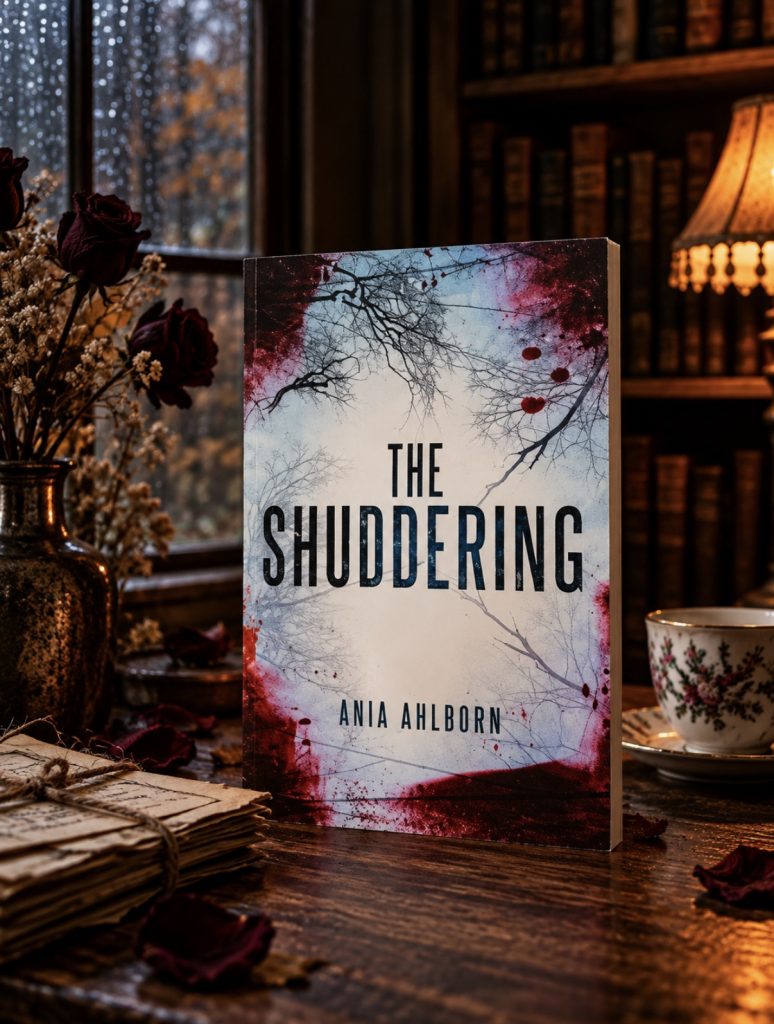
1. The Shuddering — Ania Ahlborn
Goodreads Rating: ⭐ 3.67
My Rating: ⭐⭐⭐⭐⭐ 5/5
What it’s about:
A group of friends heads to a secluded cabin in the Colorado mountains for one last getaway before the house is sold. Then a massive blizzard rolls in, leaving them completely cut off from the outside world.
Which would already be a less-than-ideal situation.
Except there’s something in the woods.
Something watching the cabin. Something hungry. And as the snow keeps falling, whatever is out there starts getting closer.
What scared the shit out of me:
This book unlocked a fear I apparently didn’t know I had. 😂
There’s something terrifying about being completely isolated in the middle of nowhere, surrounded by woods, while knowing something is outside and you can’t leave. Add a blizzard that makes escape nearly impossible, and I was done.
And the creatures? Nope.
Ahlborn doesn’t just tell you there’s something scary lurking outside—she makes you feel like you’re trapped inside that cabin with them, staring through the windows into the trees and wondering what the hell you just saw move.
This one gave me that very specific kind of fear where suddenly having curtains closed at night feels extremely important.
Who I’d recommend it to:
If you love creature horror, isolated settings, survival stories, snowstorms, gore, and the whole “there is something in those woods and it knows we’re here” situation—READ IT.
Final verdict:
⭐ 5/5 — Apparently I’m perfectly fine with serial killers, but put an unknown creature outside a cabin in the woods and I have a problem.
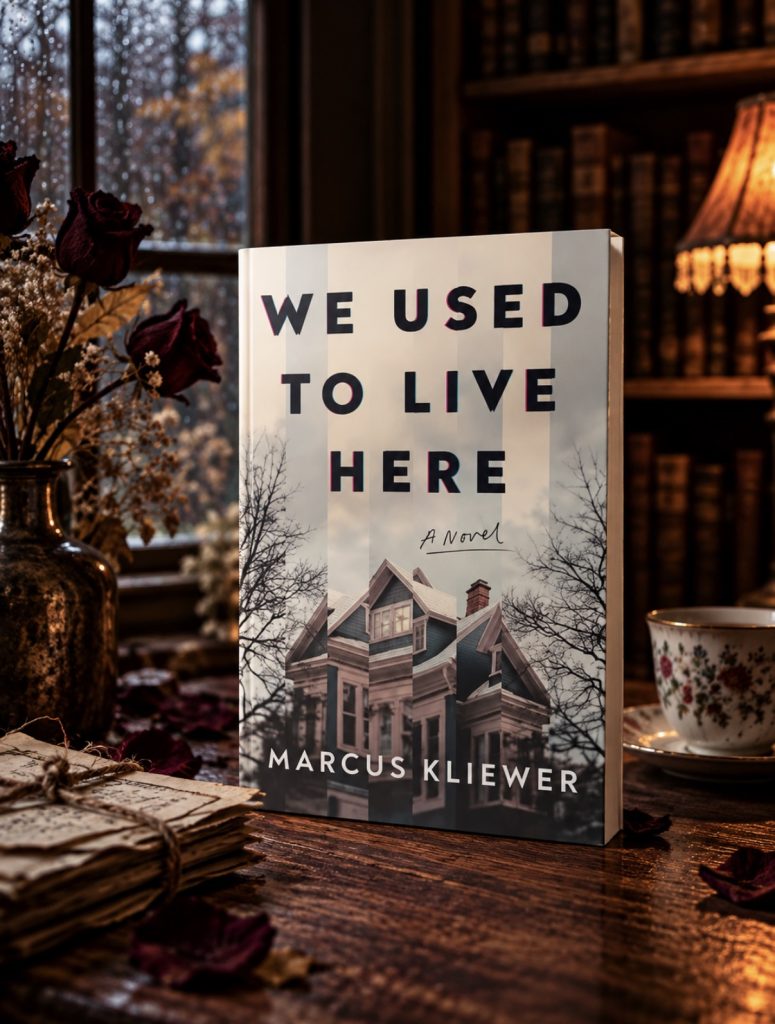
2. We Used to Live Here — Marcus Kliewer
Goodreads Rating: ⭐ 3.58
My Rating: ⭐⭐⭐⭐⭐ 5/5
What it’s about:
Eve is home alone when a family shows up at her front door with a strange request: the father says he grew up in her house and would love to show his wife and kids around his childhood home.
Against her better judgment, Eve lets them inside.
And that’s when things start getting weird.
What begins as an awkward encounter with strangers quickly turns into something much more unsettling. The family doesn’t seem particularly eager to leave, a snowstorm is closing in, and Eve begins noticing things about her home—and her reality—that don’t quite make sense.
What scared the shit out of me:
This book made me SO uncomfortable.
There’s already something horrifying about letting complete strangers into your house and then slowly realizing, Oh shit. I should not have let these people in here.
But that’s only the beginning.
The further you get, the less you understand what the hell is happening—and I mean that in the best possible way. The house, the basement, the family, Eve’s memories… eventually you start questioning everything right along with her.
This isn’t really a jump-scare kind of book. It’s that slow, creeping dread where something feels wrong, but you can’t quite put your finger on why.
And apparently my new rule is: if someone knocks on my door and says they used to live in my house, congratulations on your childhood memories. You may enjoy them from the driveway.
Who I’d recommend it to:
If you like psychological horror, creepy houses, unreliable reality, bizarre mysteries, and books that leave you sitting there afterward trying to figure out what the hell you just read, this one is absolutely worth it.
Final verdict:
⭐ 5/5 — Come back to see your childhood home? Absolutely. Come inside? Absolutely the fuck not. 😂
3. Just Like Home — Sarah Gailey
Goodreads Rating: ⭐ 3.31
My Rating: ⭐⭐⭐⭐⭐ 5/5
What it’s about:
Vera hasn’t been back to her childhood home in years—and for good reason.
It’s the house where she grew up with her mother and her father, a notorious serial killer.
But when her estranged mother is dying, Vera returns home to help sort through what remains. Almost immediately, things feel wrong. There are noises in the house. Things that shouldn’t be there. Memories Vera has spent years trying not to think about.
And then there’s whatever might be under the bed.
What scared the shit out of me:
Listen. I can handle the serial killer father.
It’s the THING UNDER THE BED I have a problem with. 😂
This book takes that stupid childhood fear that something is hiding underneath you in the dark and somehow makes your adult brain go, Well… maybe we shouldn’t dangle our feet over the edge tonight.
But what really got me was the house itself. It feels alive in this deeply unsettling way. You never quite know whether what Vera is experiencing is connected to her childhood trauma, her father’s horrific past, or whether there really is something else in that house with her.
There were multiple times I caught myself thinking, Why the hell did I choose to read this before bed?
And yes, I am fully aware that I am an adult.
That did not stop me from getting into bed a little faster.
Who I’d recommend it to:
If you love haunted-house horror, dysfunctional families, serial-killer stories, childhood trauma, weird supernatural shit, and horror that gets increasingly more disturbing the deeper you go—this is for you.
Final verdict:
⭐ 5/5 — Sarah Gailey successfully reminded me why, as a child, I used to jump into bed from three feet away so nothing could grab my ankles. 😭😂
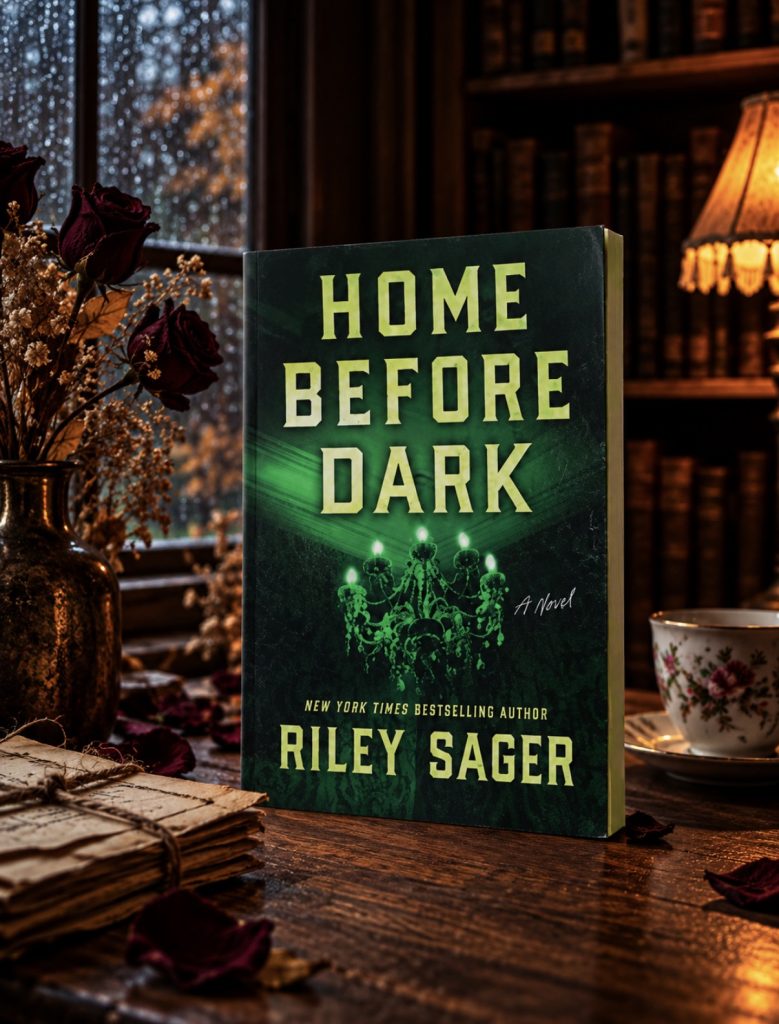
4. Home Before Dark — Riley Sager
Goodreads Rating: ⭐ 4.03
My Rating: ⭐⭐⭐⭐⭐ 5/5
What it’s about:
When Maggie Holt was a little girl, her family fled their Victorian home in the middle of the night and never went back.
Her father later wrote a bestselling book about what supposedly happened inside the house—ghostly encounters, strange noises, things moving on their own, and an increasingly terrifying series of events that eventually forced the family to run for their lives.
There’s just one problem.
Maggie doesn’t remember any of it.
Years later, she inherits the house and decides to return, renovate it, and finally figure out whether her father’s famous story was true… or whether her parents lied to her for her entire life.
What scared the shit out of me:
This one hit every single haunted-house button for me.
Old Victorian house? ✔️
Things going bump in the night? ✔️
Creepy childhood history? ✔️
A family that literally ran out of the house and never came back? ✔️✔️✔️
What I loved most is that you genuinely don’t know what to believe. The story jumps between Maggie in the present and excerpts from her father’s book, so while Maggie is trying to prove that none of it happened, you’re reading his version of events and thinking…
Okay, but what if it fucking did? 😂
It has that classic haunted-house feeling where you’re almost afraid to look down the hallway—and every time Maggie decided to investigate a noise instead of simply leaving the damn house, I questioned her survival instincts.
Who I’d recommend it to:
If you love classic haunted houses, family secrets, creepy old mansions, books-within-books, mysteries, and stories that constantly make you question whether there’s a logical explanation or an actual ghost standing at the end of the hallway—READ THIS.
Final verdict:
⭐ 5/5 — If my parents once grabbed me in the middle of the night and fled a haunted Victorian mansion, I would simply respect their decision and never return. 😂
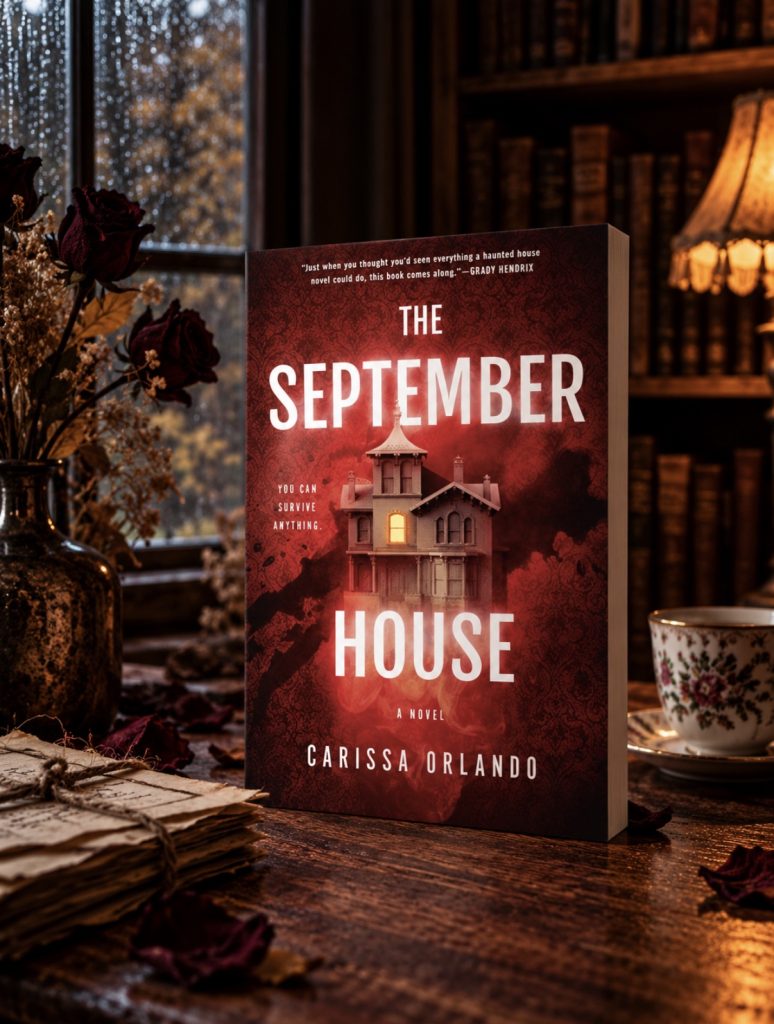
5. The September House — Carissa Orlando
Goodreads Rating: ⭐ 3.85
My Rating: ⭐⭐⭐⭐⭐ 5/5
What it’s about:
Margaret and her husband finally buy their dream home—a beautiful old Victorian house at a price that’s almost too good to be true.
And, well… there’s a reason for that.
Every September, the house becomes haunted.
Not maybe-I-heard-a-footstep haunted. We’re talking ghosts, blood running down the walls, horrifying things appearing throughout the house and an entity in the basement that Margaret knows she absolutely should not mess with.
Her husband eventually has enough and leaves.
Margaret?
Margaret likes her house. 😂
So she develops rules, learns how to coexist with the ghosts, cleans up the blood, and carries on with her life.
Then her daughter comes looking for answers.
What scared the shit out of me:
This book has some genuinely horrifying imagery.
The hauntings get progressively worse as September goes on, and the descriptions are the kind that stick in your head when you’re walking through your own dark house later.
But Margaret is what makes this book SO GOOD.
This woman is living in what might be one of the most aggressively haunted houses in literary history, and she’s basically like:
Yes, the walls bleed every September. Anyway, I need to clean the kitchen.
😂😂😂
That weird mix of horror and humor somehow makes the scary parts even more effective. You get comfortable with the absurdity of Margaret’s situation—and then the book reminds you that what’s happening inside that house is actually really fucking disturbing.
And underneath all of the ghosts and gore, there’s something much deeper going on with Margaret and her family that makes this more than just another haunted-house story.
Who I’d recommend it to:
If you love haunted houses, dark humor, ghosts, gore, dysfunctional families, increasingly unhinged supernatural activity, and a main character who refuses to be bullied out of the house she paid good money for—this is absolutely for you.
Final verdict:
⭐ 5/5 — Margaret said the house may be horrifically haunted, but have you seen the housing market? We’re staying. 😂👻
🎃 HONORABLE MENTION:
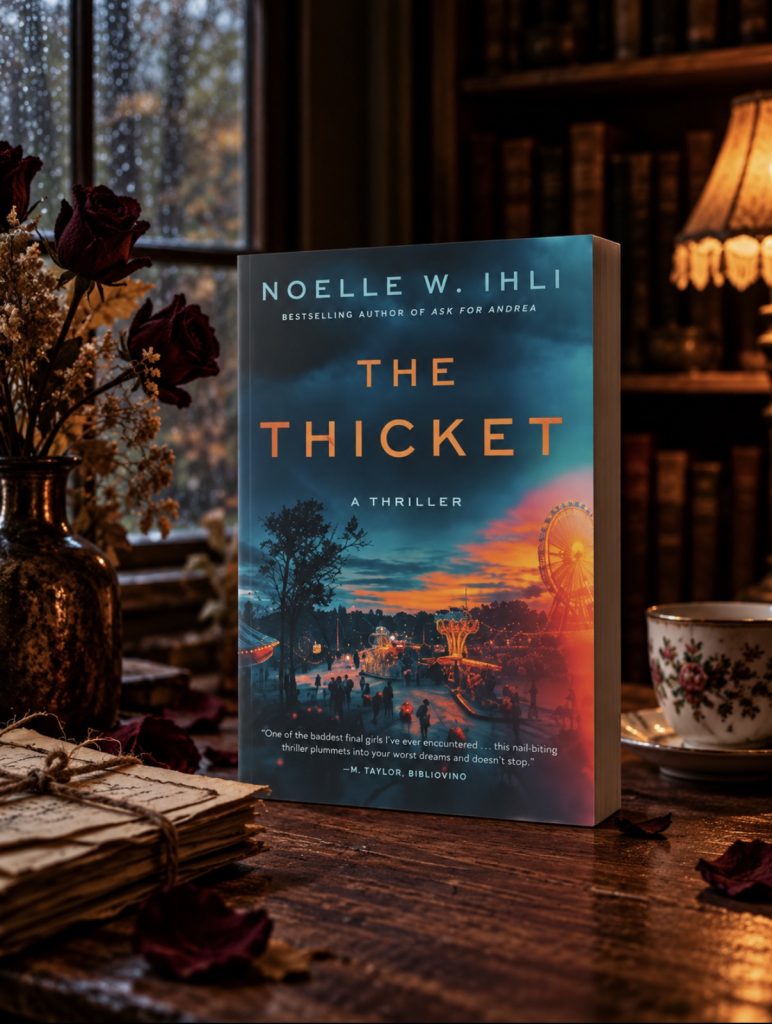
The Thicket — Noelle W. Ihli
My Rating: ⭐⭐⭐⭐⭐ 5/5
Okay, I couldn’t make a spooky-season book list and not talk about Noelle W. Ihli.
If you’ve read much from me, you probably already know she’s my favorite author. At this point, I don’t even need to know what one of her books is about before I’ll read it. She has never failed me.
And while The Thicket may not have scared me in quite the same way as the five books above, it absolutely deserves a spot here for one very important reason:
This book is the epitome of spooky season.
What it’s about:
Norah Lewis is working at The Thicket, a huge Halloween attraction filled with haunted houses, costumed actors, carnival rides—and a massive corn maze.
Basically, the kind of place you’d willingly pay money to have strangers in masks chase you around in the dark.
Except someone inside The Thicket isn’t pretending.
A killer is using the chaos of the attraction to hunt victims, and suddenly a place designed to make people scream becomes the perfect place to hide a very real nightmare.
Because when everyone is already screaming…
who’s going to notice when someone actually needs help?
Why it HAD to be on this list:
The atmosphere in this book is EVERYTHING.
The corn maze. The darkness. The costumes. The crowds. The Halloween attraction. That constant feeling that someone—or something—is right behind you.
You can practically smell October while you’re reading it.
And Ihli is ridiculously good at taking a situation that already makes you slightly uncomfortable and finding the exact thing that would make it a thousand times worse.
A dark corn maze is creepy.
A dark corn maze where people are supposed to jump out and scare you is worse.
A dark corn maze where you realize the person following you isn’t one of the actors?
Absolutely the fuck not. 😂
This one didn’t necessarily leave me afraid of my own house afterward, which is why I kept it separate from my top five. But when it comes to pure Halloween atmosphere, nothing else on this list beats it.
Who I’d recommend it to:
Anyone who loves Halloween. Period.
But especially if you love slashers, haunted attractions, corn mazes, fall carnivals, being hunted, fast-paced thrillers, and that wonderfully terrible feeling of knowing someone is out there in the dark with you.
And if you’ve never read Noelle W. Ihli before, please fix that.
She’s my favorite author for a reason.
Final verdict:
⭐ 5/5 — If spooky season could be bottled up, thrown into a corn maze, handed a weapon and told to chase you through the dark, it would beThe Thicket. 🎃🔪📚
————————————————————————————————
Now Tell Me Yours 👻📚
Those are mine—now I want to hear yours.
What book actually scared the shit out of you? What’s your ultimate spooky-season read? And just as importantly, what did I put on this list that you completely disagree with? 😂
Drop your favorites, your unpopular opinions, and the books you think I absolutely need to read in the comments. My TBR can always get a little more unhinged. 🎃📚
I woke up this morning, saw “Gypsy Rose Blanchard’s boyfriend found dead” and immediately thought, Excuse me?
Because apparently the Gypsy Rose story has decided it will simply never stop having plot twists.
Ken Urker—the longtime on-again, off-again partner of Gypsy Rose Blanchard and the father of her daughter Aurora—was found dead at a home in Raceland, Louisiana, on Thursday, October 1.
It was his 34th birthday.
The Lafourche Sheriff’s Office says deputies responded to the home around 6:15 p.m. and found Urker dead when they arrived. Authorities say the death investigation is ongoing.
And because I know exactly where everyone’s brain goes when a headline involving Gypsy Rose contains the words “found dead,” let me stop us all right there.
There is currently no indication from law enforcement that Gypsy Rose was involved in his death.
Yes. I checked. Because obviously I checked.
Gypsy Says It Was an Overdose
Early Friday morning, Gypsy spoke to People and said Ken died from an overdose.
But—and this is important—she says she doesn’t know what he took or whether the overdose was intentional. Law enforcement has not yet announced an official cause of death, and the investigation remains open.
Gypsy also said Ken had not been in a good state of mind recently and spoke about the amount of online harassment and public scrutiny he had endured.
The two had one of those relationship timelines that requires a whiteboard to properly explain.
They first connected while Gypsy was still in prison. They got engaged. They broke up. Gypsy married Ryan Anderson. She got out of prison. That marriage fell apart. She reunited with Ken.
And in December 2024, Gypsy and Ken welcomed their daughter, Aurora.
Now, less than two years later, Aurora has lost her father.
And THAT is the part where the internet needs to remember that underneath all of the headlines, documentaries, TikToks and reality television, there is a little girl involved in this story.
So What Actually Happened?
Right now?
We don’t completely know.
Gypsy says Ken overdosed. Police say the death investigation is ongoing. Until investigators or the coroner release more information, anything beyond that is speculation—and the internet certainly does not need my help with that part.
But waking up to the headline “Gypsy Rose Blanchard’s boyfriend found dead on his birthday” was absolutely not on my 2026 bingo card. Especially after the botched execution on Christa Pike…
So naturally…
Well, now I need to know what happened.
This is a developing story. I’ll update this post if authorities release a confirmed cause of death or other significant information.
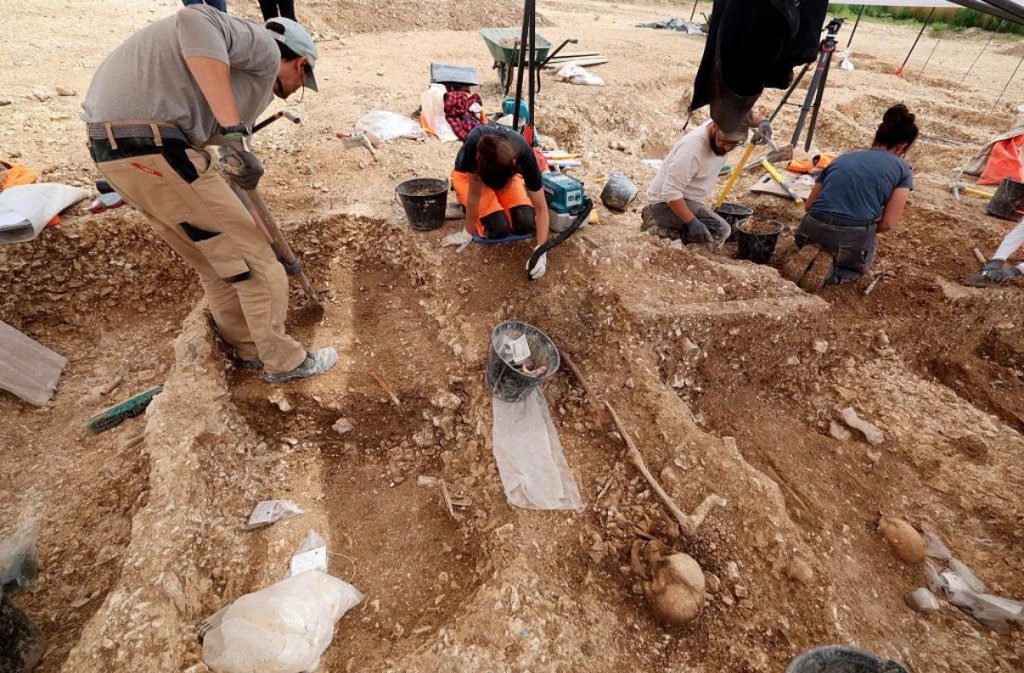
Because imagine showing up to work on a canal, digging into the French countryside and realizing the dirt underneath you isn’t just dirt.
It’s a cemetery.
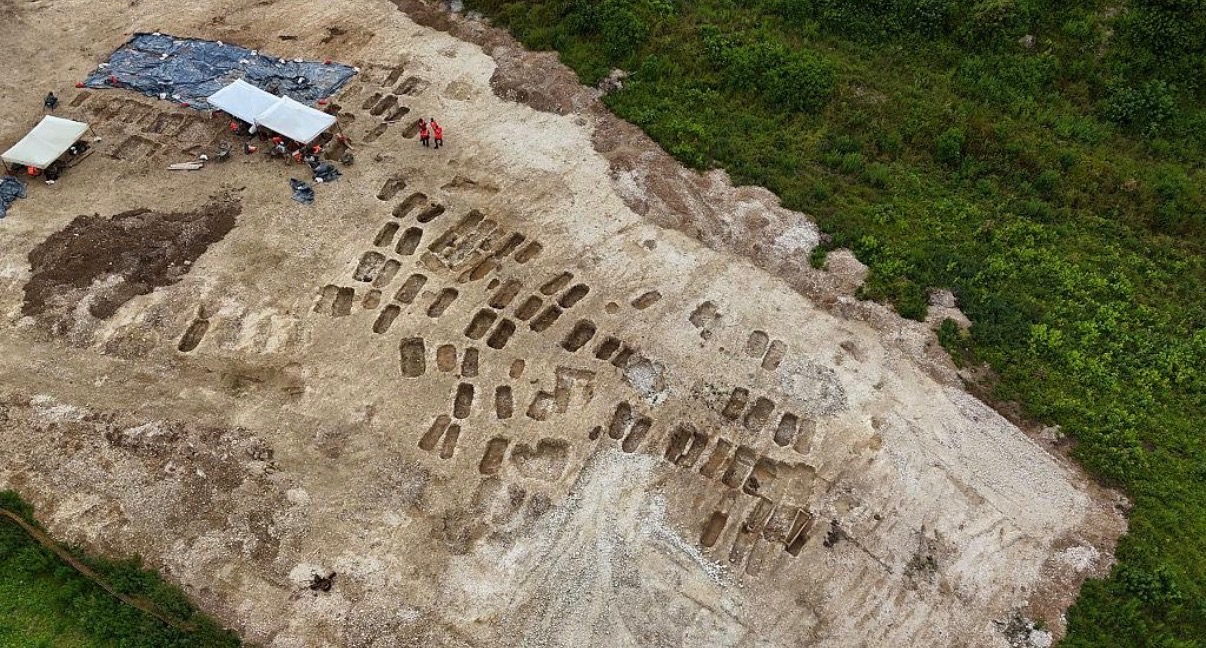
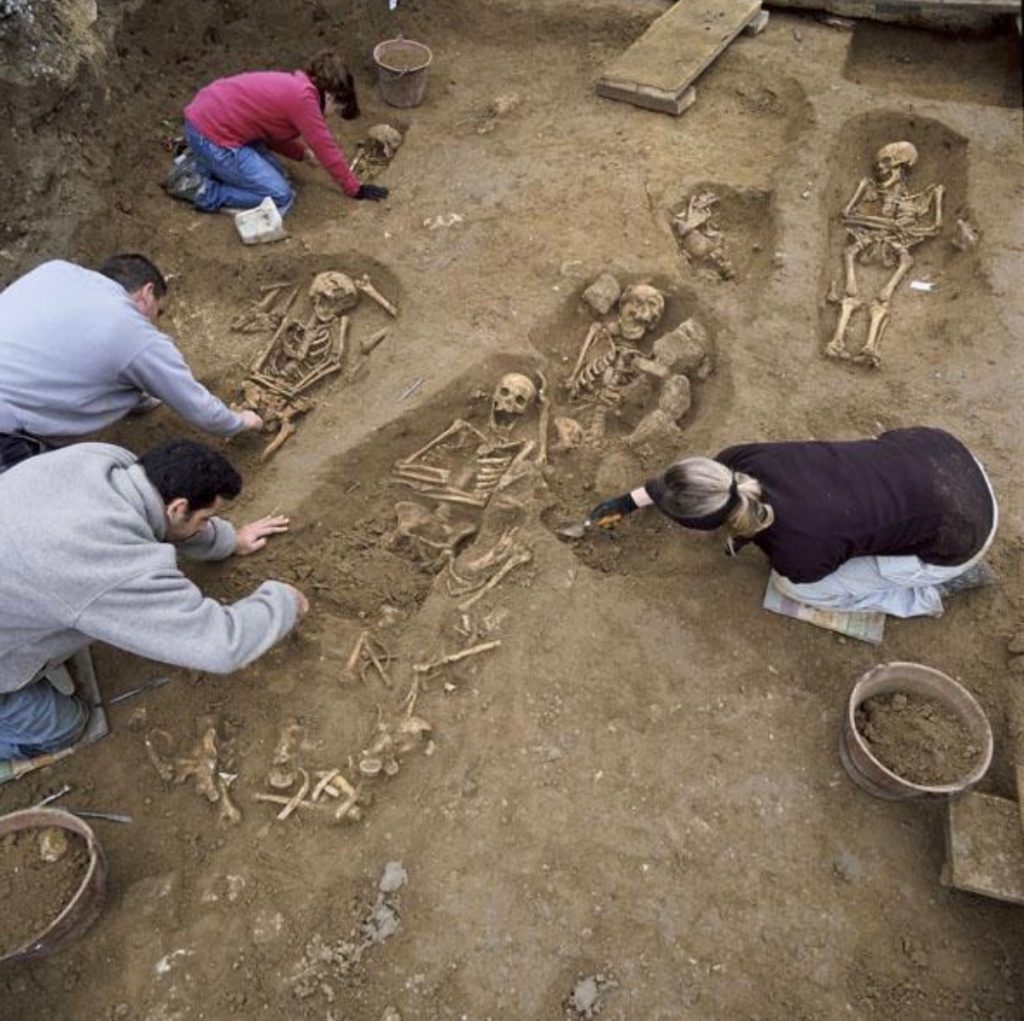
And not a little forgotten family burial plot, either. Archaeologists have uncovered 546 medieval graves so far—and apparently the words “so far” are doing some pretty heavy lifting here because they haven’t even excavated the entire site.
Some of these people were buried five layers deep.
Five.
So naturally, instead of reading that headline like a normal person and continuing with my day, I needed to know who all these people were, why they were buried there, and how an entire cemetery containing hundreds of human beings essentially disappeared from memory.
And that’s where this rabbit hole gets interesting.
Okay, But Why Are There 546 People Buried Here?
The first thing I wanted to know was whether somebody already knew this cemetery existed. Because 546 graves don’t exactly scream “tiny forgotten burial ground.”
And technically, archaeologists knew there was something here. The site is in Beaurains-lès-Noyon in northern France, along the route of the enormous Seine-Nord Europe Canal project. Before construction could move forward, archaeologists were brought in to investigate what was beneath the ground.
What they uncovered kept getting bigger.
By June 2026, more than 300 graves had been identified. By September, that number had climbed to 546—and the excavation still wasn’t finished.
But the number isn’t even the strangest part.
In some areas, the dead were buried up to five layers deep, one generation of graves above another.
Which immediately made me wonder:
What happened here that required this many graves?
Then the Leprosy Theory Entered the Picture
At first glance, hundreds of people buried together might make you think plague, war, famine—some catastrophic event that killed a huge number of people at once.
But that’s not what archaeologists are looking at here.
The burials appear to span centuries, and among the oldest remains, researchers noticed something unusual: some individuals showed signs of serious medical conditions that may have severely affected their mobility.
That led archaeologists to consider a much stranger possibility.
Could there have been a medieval leprosy hospital nearby?
Now that sent me in another direction entirely.
Because if this was connected to a place where people with leprosy were isolated and cared for, suddenly hundreds of burials in one location begin to make a little more sense.
Except there’s a problem.
They don’t actually know that’s what this was.
And the other possibility may be even more fascinating.
It’s possible there was no mysterious hospital, no single disaster and no extraordinary explanation at all.
This may simply have been the cemetery for a medieval community whose story has largely disappeared.
And somehow, I think that makes it even stranger.
We’re talking about hundreds of people—men, women and children—who lived entire lives here. They had families. They got sick. They worked. They buried one another in the same ground, generation after generation, until some graves were stacked five levels deep.
Then enough time passed that the community changed, the cemetery disappeared from view, and eventually people were preparing to dig a canal straight through it.
Imagine an entire piece of your community existing for centuries and eventually becoming something people have to rediscover with an excavator.
And archaeologists still aren’t sure exactly who these people were.
The Bodies Are Starting to Talk
Of course, archaeologists aren’t literally asking 546 skeletons what happened here—but honestly, they may be the closest thing we have to witnesses.
The remains can reveal clues about age, biological sex, disease, injuries and physical stress, while radiocarbon dating can help determine when different people were buried. Researchers can then compare those findings with historical records to figure out how long this cemetery was used and what kind of community may have surrounded it.
And this is the part I love about archaeology.
These people didn’t leave behind an explanation for us. There’s no sign sitting in the field saying, “Here’s who we were and why we buried our dead here.”
So researchers have to reconstruct the story from what survived.
Here’s the part that keeps bothering me: 546 is not necessarily where this ends.
That was the number uncovered while excavation was still underway. So somewhere beneath that stretch of French countryside, there may still be more graves waiting to be found.
And I keep coming back to the same thought.
At some point, every person archaeologists are uncovering here was known by somebody.
Someone knew their name. Someone recognized their face. Someone stood at at least some of these graves and went home without them.
Now, centuries later, we don’t even know exactly why they’re all there.
That’s the part of archaeology that gets me. We tend to think of history as something permanent because we write things down, take pictures and document our lives.
But 546 people can disappear from collective memory badly enough that one day somebody starts building a canal over them.
That is absolutely wild to me.
So…. What Are They Doing There?
For now, we don’t know.
Maybe further analysis will confirm that this cemetery was connected to a place that cared for people with leprosy or other illnesses. Maybe researchers will discover it belonged to an ordinary medieval community whose cemetery simply grew for generations.
Or maybe the answer is something nobody has considered yet.
That’s what hooked me about this story in the first place. Finding 546 graves sounds like the discovery.
It isn’t.
The discovery opened the door to a much bigger question: Who were these people?
Researchers now have hundreds of lives sitting in front of them like pieces of a puzzle, and somewhere among the bones, historical records and dates is an answer.
Until they find it, I’ll be over here wondering how many other completely forgotten pieces of history are sitting underneath places we walk and drive across every single day.
Because apparently all it takes is somebody deciding to dig a canal.
Nearly two years after a night inside a Cornell University fraternity house, a case that once ended without criminal charges is back under investigation.
Seven former members of Cornell’s Chi Phi fraternity are accused in a civil lawsuit of sexually assaulting a fellow student during the night of October 19–20, 2024. The allegations have spread rapidly online under a name that has become difficult to miss: the Cornell 7.
But the story is more complicated than the posts circulating on social media.
There was a police investigation. There was a university investigation. No criminal charges were filed. Cornell imposed disciplinary sanctions. A civil lawsuit followed nearly two years later. And now, prosecutors have reopened the criminal investigation.
So what allegedly happened inside the Chi Phi house that night—and why is the case being looked at again now?
What Happened at the Chi Phi House?
According to a civil lawsuit filed nearly two years later, the night began on October 19, 2024, when a Cornell student identified in court documents as Jane Doe went to the Chi Phi fraternity house in Ithaca, New York.
The lawsuit alleges that Doe was already heavily intoxicated when she arrived and that, once inside, she was given additional substances, including what she was told was ketamine.
What happened over the hours that followed is now at the center of the case.
Doe alleges that seven fraternity members sexually assaulted her during the night. The lawsuit also describes a Snapchat group message that was allegedly sent while she was upstairs, inviting other fraternity members to come to the room.
These allegations have not been proven in criminal court, and no criminal charges were filed against the seven men following the original investigation. Attorneys representing some of the men have disputed the allegations or their clients’ alleged involvement.
What Did She Tell The Police?
More than three weeks after the alleged assault, Doe sat down with Cornell University Police on November 14, 2024. The interview continued the following day.
A transcript of that interview, obtained by CBS News New York nearly two years later, provides a more complicated picture of what she told investigators at the time.
Doe described some of the sexual activity earlier in the night as consensual, while also telling investigators that she had been extremely intoxicated and had gaps in her memory. But when discussing what she said happened later, her account changed.
According to the transcript, Doe told the investigator, “I can say with 100% confidence I was raped.”
She also described swatting one man’s hand away, telling another she was uncomfortable or too tired, and characterized another interaction as coercion. She told investigators she had been “completely and totally incapacitated.”
That transcript would become especially significant nearly two years later—because the district attorney says he never saw it before his office decided not to pursue criminal charges.
So Why Weren’t Criminal Charges Filed?
According to Tompkins County District Attorney Matthew Van Houten, his office decided not to pursue criminal charges in November 2024 based largely on the six-page statement Doe signed after her interviews with Cornell University Police.
Van Houten has said the signed statement his office received described some of Doe’s drug use and sexual activity as voluntary and consensual. However, newly reported details from her police interview show that her account was more complicated: she described later encounters as coercive, said she had been “completely and totally incapacitated,” and told investigators she was “100% confident” she had been raped.
But there is now an important complication.
Van Houten says his office never received the full transcript of Doe’s police interview—the transcript that shows her telling an investigator she was “100% confident” she had been raped.
Cornell has said its police department provided the results of its investigation to the district attorney. CBS News has not independently obtained Doe’s final six-page signed statement, so exactly how her full interview was condensed into that document remains an important unanswered question.
Van Houten has now said the newly reported transcript changes the landscape of the case and warrants further investigation.
What Did Cornell Do?
While the criminal investigation ended without charges in 2024, Cornell University conducted its own investigation through its Title IX process.
Cornell President Michael Kotlikoff later provided more detail about the outcomes. He said that of the seven students accused, two were expelled, two were suspended for at least two semesters, one had already graduated before sanctions could be imposed, and two were found not responsible for sexual misconduct.
The university also took action against Chi Phi. Cornell closed the Chi Phi chapter in 2024, and the fraternity remains barred from campus.
But a university disciplinary proceeding is separate from a criminal case. Cornell can determine whether a student violated university policy and impose sanctions, but it cannot convict someone of a crime or impose a criminal sentence.
That distinction helps explain how university discipline could occur while no criminal charges were filed.
UPDATE — September 30, 2026: Cornell has now agreed to an independent outside review of the university’s handling of the 2024 allegations. The review, which will be conducted by outside counsel, comes after New York Gov. Kathy Hochul called for an independent examination of Cornell’s response to the case.
The Lawsuit That Brought the Case Back Into the Spotlight
In September 2026, nearly two years after the night at Chi Phi, Doe filed a civil lawsuit in New York state court.
The lawsuit names the seven former Chi Phi members and also brings claims against Cornell University, the fraternity, Doe’s sorority and the nightclub that allegedly served her alcohol while she was under 21.
The complaint presents a far more detailed account of the night than the version prosecutors say they reviewed in 2024. It alleges that Doe was pressured or coerced into consuming alcohol and drugs before being sexually assaulted over a period of several hours.
It also points to messages allegedly exchanged among fraternity members around the time of the incident. Those messages have become a major part of the renewed public attention surrounding the case.
The filing of the lawsuit did not itself establish that the allegations are true. A civil complaint contains allegations that still have to be litigated, and attorneys for several of the men have denied wrongdoing or disputed their clients’ alleged involvement.
But the lawsuit did something else: it brought the case—and evidence prosecutors say they had not previously seen—back into public view.
Why Is the Cornell 7 Case Being Reopened Now?
The case is being reopened because the information available now appears to go beyond what prosecutors say they reviewed when they declined to pursue charges in 2024.
The civil lawsuit brought renewed attention to the case and contains allegations that Van Houten says were not reflected in the signed statement his office originally received. Since then, additional material has also surfaced publicly, including the police interview transcript and messages allegedly exchanged among fraternity members.
Van Houten says he has already begun speaking with Doe and her attorneys as part of the renewed investigation. He has also said his office is seeking additional records and evidence connected to the case.
This time, the case is expected to go before a Tompkins County grand jury. Van Houten told CBS News he hopes to present it within roughly 45 days.
A grand jury presentation does not mean criminal charges are guaranteed. The grand jury will hear evidence and determine whether there is sufficient basis to indict any of the individuals involved.
For now, the criminal investigation is active again—but there have been no new criminal charges announced against the seven men.
What Happens Next?
The next major development is expected to come from the grand jury.
Prosecutors can present testimony, documents, digital evidence and other information gathered during the renewed investigation. The grand jury will then decide whether there is enough evidence to return an indictment against any of the men.
If indictments are returned, the case would move into the criminal court system. If the grand jury does not indict, the civil lawsuit can still continue because the criminal and civil cases are separate proceedings with different legal standards.
And that means there are really two cases to watch now: the reopened criminal investigation and Doe’s civil lawsuit.
There are still significant unanswered questions—particularly about what information was available during the original investigation, what prosecutors received in 2024, and what additional evidence may now be presented to the grand jury.
For a case that appeared to be over nearly two years ago, the Cornell 7 story may only now be entering its most consequential stage.
Well, Now I Need to Know…
This is where this rabbit hole stops—for now.
Because the biggest question isn’t simply what happened inside the Chi Phi house that night. It’s how a case involving allegations this serious could be investigated, closed without criminal charges, and then reopened nearly two years later after information from the original investigation surfaced publicly.
What exactly will the grand jury hear? Will the renewed investigation uncover evidence prosecutors didn’t have the first time? And will any criminal charges ultimately be filed?
We don’t know yet.
But this case is moving again, and I’ll be following it as it does.
New details have emerged about Christa Pike’s condition following Tennessee’s failed attempt to execute her by lethal injection on September 30.
According to a court filing submitted Friday by Pike’s attorneys, Pike remains hospitalized, critically ill, unconscious and on a ventilator. Her attorneys say she is being treated for the effects of the pentobarbital administered during the execution attempt and has significant injuries to both arms.
The filing also provides new details about what Pike’s attorneys believe went wrong during the execution. They allege that problems with the IV lines may have caused pentobarbital to enter the tissue surrounding the IV sites rather than properly entering her bloodstream. Despite the first round failing to cause her death, Tennessee’s execution team proceeded with the protocol’s second, backup round of pentobarbital.
Hospital staff have reportedly been working to keep Pike alive while her body clears the execution drugs. Her current prognosis has not been publicly disclosed.
Meanwhile, Tennessee Governor Bill Lee has ordered a comprehensive third-party review of the failed execution and has halted the state’s remaining scheduled executions for 2026 while the incident is investigated.
The Tennessee Department of Correction has maintained that officials followed every step of the state’s established execution protocol. As of Friday afternoon, the state has not publicly provided an official explanation for why two rounds of pentobarbital failed to cause Pike’s death.
This remains a developing story.
Update — October 2, 2026
As of October 2, Pike remains alive and hospitalized in critical condition. Her attorneys say she is receiving life-saving treatment and may have suffered brain damage from oxygen deprivation, though the extent of any permanent injury has not been publicly confirmed. ————————————————————————————————
UPDATE — OCTOBER 1, 2026 — 3:00PM CST
Christa Pike remains alive and in critical condition following Tennessee’s failed attempt to execute her on September 30. Her attorneys confirmed Thursday afternoon that she is hospitalized and receiving life-saving medical care, although they said they still do not know her prognosis or the full extent of her condition.
Pike survived after receiving two doses of pentobarbital, the drug Tennessee uses for lethal injection. Governor Bill Lee has since called what happened “deeply disturbing,” ordered a third-party review, and halted Tennessee’s remaining execution scheduled for this year.
And this is where it becomes difficult not to stop and think about what actually happened.
Veterinary medicine routinely uses pentobarbital as a euthanasia drug to provide a controlled death for suffering animals. Yet the State of Tennessee had years to prepare, an established execution protocol, an execution team, and a scheduled date—and after administering the drug twice, Pike survived and is now receiving life-saving treatment in critical condition.
Whatever your opinion of Christa Pike or the death penalty itself, that is difficult to comprehend.
This wasn’t an emergency procedure thrown together at the last minute. It was planned, scheduled, litigated, and prepared for well in advance.
Tennessee set out to carry out a death sentence.
Instead, it created a medical emergency.
————————————————————————————————
Update— October 1, 2026 — 8:00AM CST
Christa Pike survived Tennessee’s attempt to execute her by lethal injection Wednesday night. According to reporting from the Associated Press, Pike remained alive after receiving two doses of pentobarbital and was transported by ambulance from Riverbend Maximum Security Institution to a medical facility.
Tennessee Governor Bill Lee has since ordered a comprehensive, third-party review to determine what occurred. The state’s remaining scheduled execution for 2026 will not be carried out while officials examine what happened. The Tennessee Department of Correction said it followed every step of the state’s established execution protocol and confirmed that the protocol did not allow officials to perform additional procedures beyond those already attempted.
WSMV has confirmed that Dr. Mark Fowler, the physician involved in Tennessee’s failed May execution attempt of Tony Carruthers, also oversaw Christa Pike’s execution attempt. Carruthers’ execution was abandoned after officials were unable to establish IV access for more than an hour. Pike’s attorneys had previously raised concerns about her own vein condition and the possibility of complications during lethal injection.
————————————————————————————————
BREAKING UPDATE— September 30, 2026–9:00 PM CST
In another extraordinary turn, Christa Pike remained alive after lethal-injection drugs were administered by the State of Tennessee, according to Luke Ihnen, an assistant federal defender on Pike’s legal team. Ihnen said the defense team is filing another emergency motion seeking to stay the execution. This is a rapidly developing situation, and official details from the Tennessee Department of Correction have not yet clarified exactly what occurred during the execution attempt.
————————————————————————————————
Earlier Update— September 30, 2026
The U.S. Supreme Court has lifted the stay that temporarily halted Christa Pike’s execution earlier today, clearing the way for Tennessee to proceed. The Tennessee Department of Correction says it intends to carry out the execution tonight before the execution order expires at midnight. As of this update, Pike’s execution has not yet been confirmed as carried out.
————————————————————————————————
Original Story— September 30, 2026
Just about an hour before Christa Gail Pike was scheduled to be executed by lethal injection in Tennessee on Wednesday morning, a federal appeals court stopped it.
Pike, 50, was scheduled to die at 10 a.m. CDT on September 30, 2026, at Riverbend Maximum Security Institution in Nashville. Had the execution gone forward, she would have become the first woman executed by Tennessee in more than 200 years.
Instead, the U.S. Court of Appeals for the Sixth Circuit issued a stay of execution “until further order.”
But that does not mean Pike’s death sentence has been overturned.
Here’s how the extraordinary series of events unfolded, beginning with the last-minute court battle that temporarily stopped the execution.
Why Was Christa Pike’s Execution Stopped?
The last-minute stay came from the U.S. Court of Appeals for the Sixth Circuit, which is considering a legal question involving Pike’s federal appeals.
At issue is whether Pike’s latest request can be treated as a reopening of her earlier federal habeas corpus proceedings—or whether it legally amounts to a new habeas petition. That distinction matters because federal law places strict limits on second or successive habeas petitions.
Pike’s attorneys have argued that evidence concerning her severe childhood abuse, mental health history and young age at the time of the crime was not adequately considered when she was sentenced to death.
The stay gives the Sixth Circuit time to consider the legal issue. It does not erase Pike’s conviction or death sentence, and it does not necessarily mean the execution has been canceled permanently.
The Final 48 Hours Before The Stay
Monday, September 28: Tennessee Gov. Bill Lee declined to grant Pike clemency, allowing the execution to move forward.
Tuesday, September 29: The U.S. Supreme Court denied Pike’s request to halt the execution.
Wednesday, September 30: Witnesses had already gathered at Riverbend Maximum Security Institution when, at approximately 9 a.m. CDT—about one hour before the scheduled execution—the Sixth Circuit issued the stay. Hours later, the U.S. Supreme Court lifted that stay, clearing the way for Tennessee to proceed with the execution. That evening, the state administered two doses of pentobarbital, but pike remained alive and was later transported to a hospital.
Who Were Christa Pike and Colleen Slemmer?
Christa Pike was 18 years old when she murdered 19-year-old Colleen Slemmer in Knoxville, Tennessee, in January 1995. Both young women were students at the Knoxville Job Corps.
Prosecutors said Pike believed Slemmer was interested in her boyfriend, Tadaryl Shipp. Pike, Shipp and another student, Shadolla Peterson, lured Slemmer to a secluded wooded area on the University of Tennessee agricultural campus, where Slemmer was attacked and killed.
The brutality of the murder—and a pentagram carved into Slemmer’s body—brought national attention to the case during an era already gripped by fears surrounding so-called Satanic activity. Shipp has since acknowledged that he was the person who carved the pentagram.
But Colleen Slemmer was more than the victim at the center of a notorious murder case.
Her mother, May Martinez, has described Colleen as easygoing and trusting. She volunteered with the Special Olympics, loved roller skating and was interested in computers. Martinez has said she still thinks about her daughter every day and supports carrying out Pike’s death sentence.
Pike was convicted of murder and conspiracy to commit murder and sentenced to death. Shipp, who was 17 at the time of the crime, received life in prison with the possibility of parole. Pike was the only defendant sentenced to death.
Does the Stay Mean Christa Pike Won’t Be Executed?
No—not necessarily.
A stay of execution pauses an execution; it does not automatically overturn the death sentence itself.
For now, Pike remains under a death sentence, but Tennessee cannot carry out the execution while the Sixth Circuit’s stay remains in effect. The appeals court must now decide the legal issue before it concerning Pike’s latest federal filing.
Depending on what the court decides, the case could return to federal district court for further proceedings, or Pike’s latest attempt to reopen her case could be rejected. Additional appeals could follow.
For now, Pike’s execution remains on hold while the stay is in effect. Whether that changes will depend on what happens next in the courts.
What Happens Next?
For now, the next move could come from either the Sixth Circuit or the U.S. Supreme Court.
The appeals court’s stay remains in place while it considers the legal questions surrounding Pike’s latest filing. Until the court takes further action, Tennessee cannot proceed with her execution.
If the stay is later lifted and Pike’s remaining legal challenges fail, Tennessee could seek to move forward with another execution date. If her attorneys succeed in reopening the federal proceedings, the case could instead return to a lower court for additional review.
After more than three decades of appeals, the case of Christa Pike and the murder of Colleen Slemmer is still not over.
This is a developing story. Well, Now I Need to Know will update this article as new court decisions or execution information becomes available.